
Undergraduate Programs
Explore the programs offered by this organization.
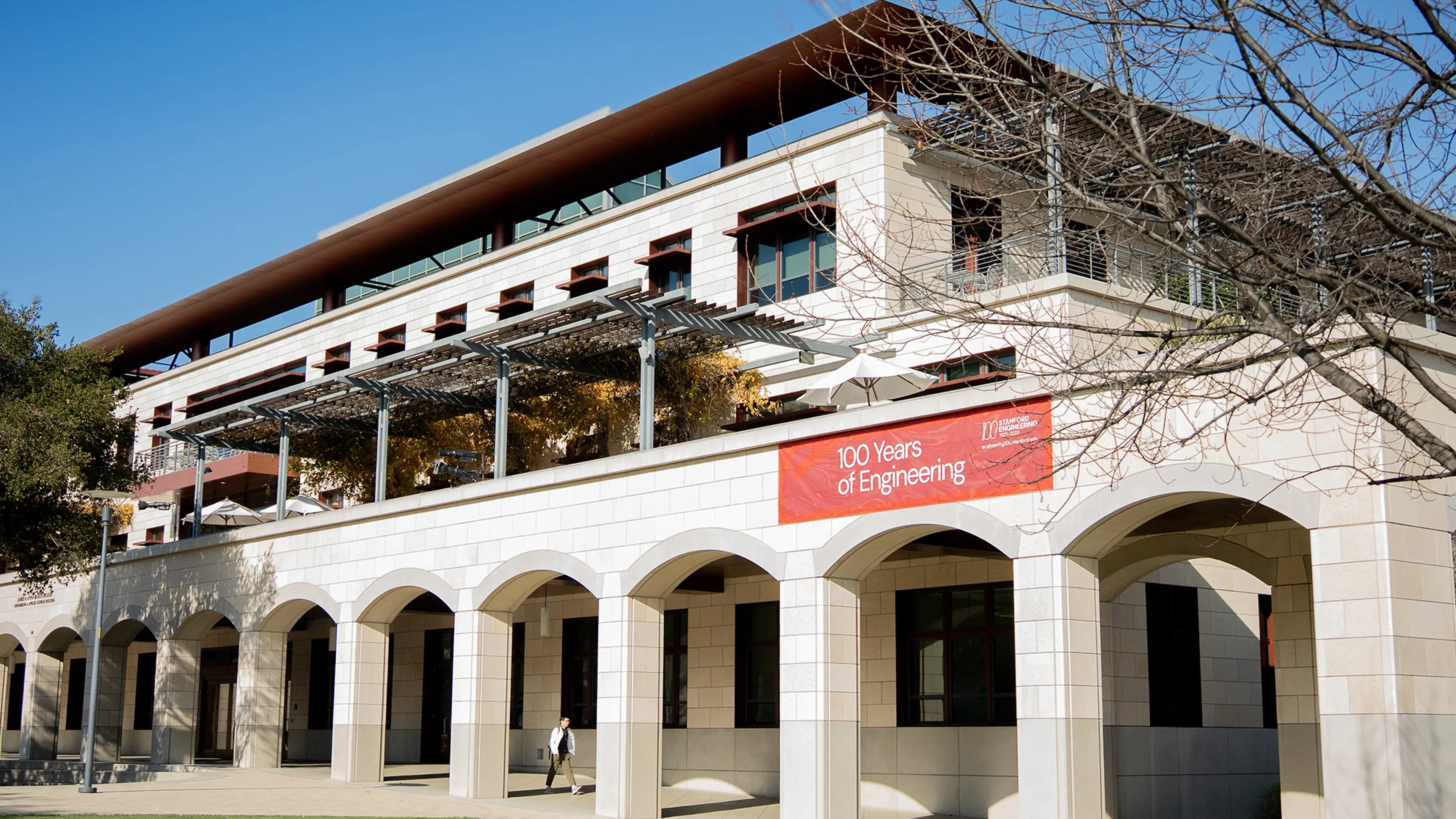
The Department of Management Science and Engineering (MS&E) at Stanford University focuses on teaching and research at the interface of engineering, business, and public policy. The department’s mission is to advance the design, management, operation, and interaction of complex technological, economic, and social systems. By integrating deep analytical foundations and organizational theory with practical applications, MS&E prepares students to become outstanding engineers and future leaders in technology, policy, and industry.
MS&E offers a Bachelor of Science (B.S.) degree and an undergraduate minor, equipping students with essential skills in engineering systems analysis and organizations. The curriculum prepares graduates for diverse career paths—including finance, investment banking, management consulting, project or product management, engineering management, operations, or for graduate school in management, engineering, public policy, law, or medicine, or public policy, sometimes after working a few years.
The department also collaborates with Computer Science, Mathematics, and Statistics to offer the interdisciplinary Data Science B.S. program.
At the graduate level, MS&E offers Master of Science (M.S.) and Doctor of Philosophy (Ph.D.) degrees, alongside coterminal B.S./M.S. options, joint degrees with the School of Law and the Public Policy Program, and dual master's degrees with other engineering departments. The M.S. program is a professionally focused degree that students typically complete in five quarters, which allows time for a summer internship.
Working professionals can pursue MS&E coursework part-time or online through the Center for Global Online Education (CGOE). This includes the Honors Cooperative Program (HCP) for earning an M.S. degree, and the Non-Degree Option (NDO) for taking individual graduate-level courses.
MS&E’s research and teaching focus on solving complex technological, societal, and organizational problems. Key areas of investigation span analytical foundations and functional applications, including:
Decision and risk analysis, optimization, and stochastic systems.
Economics, finance, and organizational science.
Entrepreneurship, technology policy, and strategy.