Undergraduate Programs
Explore the programs offered by this organization.
The Department of Chemical Engineering opens in a new tab at Stanford University offers undergraduate and graduate students the opportunity to pursue coursework and research at the intersection of chemistry, biology, physics, mathematics, and engineering. Chemical engineers design, conceive, and implement processes to produce, transform, and transport materials—translating laboratory discoveries into full-scale technologies. The department provides a collaborative environment with academic pathways in energy sciences and technology, as well as interdisciplinary biosciences.
The undergraduate program develops students' understanding of the fundamental scientific and mathematical principles underlying chemical processes. Built on a strong foundation of chemistry, physics, and biology, the curriculum includes applied mathematics, material and energy balances, thermodynamics, fluid mechanics, heat and mass transfer, separation technologies, chemical reaction kinetics, and process design. This comprehensive preparation equips students for successful careers in industry, government, or advanced academic study.
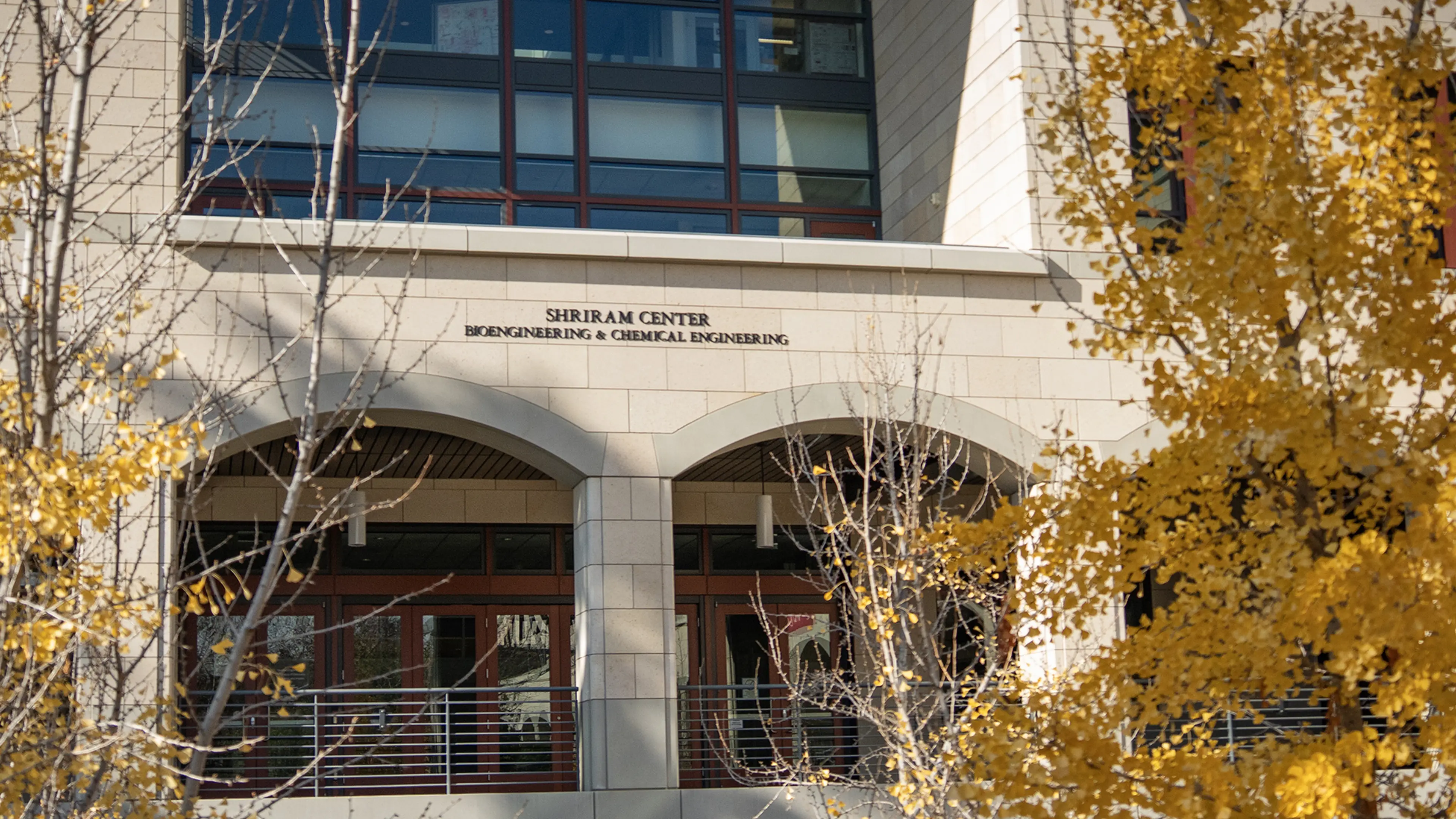
Undergraduates considering a major in Chemical Engineering are encouraged to meet with faculty and visit student services staff in Shriram Room 129.
For those seeking advanced studies, the department offers Master of Science (M.S.), Engineer, and Doctor of Philosophy (Ph.D.) degrees, as well as coterminal degree options. Active Stanford graduate students can apply for admission to advanced programs through a Graduate Authorization Petition, while external applicants apply through the Graduate Admissions process.
Graduate students engage in cutting-edge research across a diverse array of advanced fields, including:
Biosciences and Bioengineering: Biocatalysis, biochemical engineering, biophysics, protein biotechnology, and functional genomics.
Materials and Interface Science: Computational materials science, colloid science, soft materials science, molecular assemblies, semiconductor processing, and surface and interface science.
Fluid Mechanics and Rheology: Dynamics of complex fluids, microrheology, Newtonian and non-Newtonian fluid mechanics, polymer physics, and transport mechanics.
Energy and Sustainability: Energy conversion, renewable fuels, and solar utilization.
The department supports its doctoral students through a combination of fellowships and assistantships. Incoming Ph.D. students typically receive departmental fellowships, and matriculated Ph.D. students are funded through fellowships, research assistantships (appointed by individual faculty), or teaching assistantships (appointed by the department chair). These assistantships are paid positions that provide both a salary and a tuition allocation. Students are also encouraged to apply for external, nationally competitive awards, such as National Science Foundation fellowships.