Undergraduate Engineering Student Handbook opens in a new tab
The Handbook for Undergraduate Engineering Programs website is the definitive resource for undergraduate engineers.
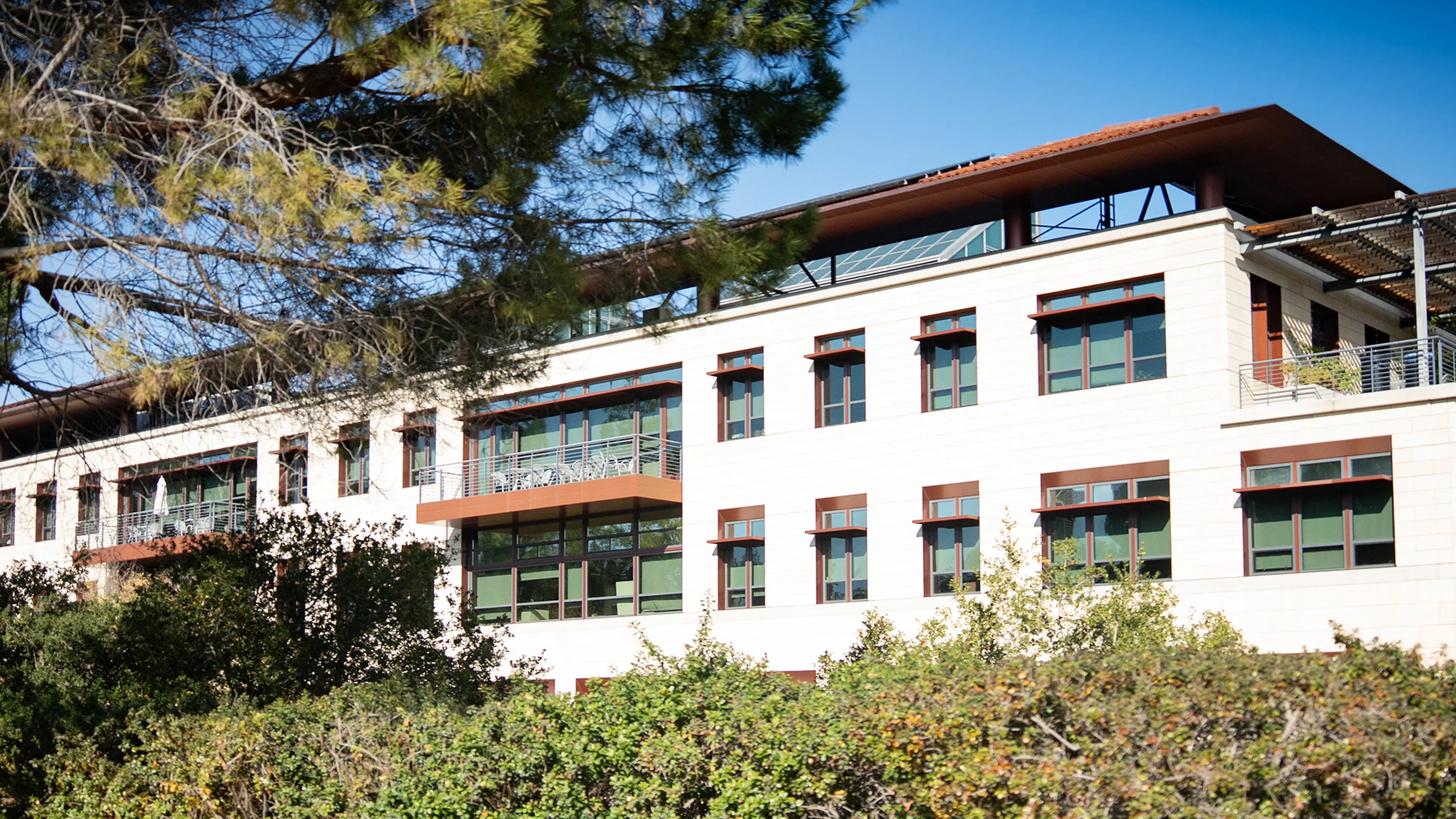
The Stanford School of Engineering is dedicated to seeking solutions to major global challenges and educating leaders who will make the world a better place through engineering and technology. For over a century, the school has conducted groundbreaking research and delivered world-class education, fostering a culture of deep collaboration, innovation, and creative problem-solving.
The school is comprised of nine academic departments: Aeronautics and Astronautics, Bioengineering, Chemical Engineering, Civil and Environmental Engineering, Computer Science, Electrical Engineering, Management Science and Engineering, Materials Science and Engineering, and Mechanical Engineering. These departments, alongside the Institute for Computational and Mathematical Engineering (ICME), are responsible for graduate curricula, research activities, and departmental undergraduate majors.
Additionally, the school features specialized academic hubs:
The David and Helen Gurley Brown Institute for Media Innovation: Supports interdisciplinary research and creative projects at the intersection of technology and storytelling to transform how we inform and connect communities.
The Hasso Plattner Institute of Design (the d.school): Offers undergraduate majors and brings together students and faculty from multiple disciplines to solve big problems using human-centered design thinking.
The Institute for Computational and Mathematical Engineering (ICME): Develops advanced mathematical and computational models to solve complex, data-driven scientific and engineering problems.
The Precourt Institute for Energy: Drives interdisciplinary energy research, technological innovation, and policy analysis to accelerate the transition to an affordable, sustainable, and secure energy future.
The Stanford Woods Institute for the Environment: Promotes interdisciplinary environmental research, education, and outreach to foster a sustainable world.
Stanford Engineering offers 16 defined undergraduate majors, plus the option for students to design their own. Undergraduates can pursue a Bachelor of Science (B.S.) degree across traditional departmental majors, or opt for alternative, flexible pathways:
Engineering (B.S.): Features faculty-approved, interdisciplinary subplans including Atmosphere/Energy, Biomechanical Engineering, Biomedical Computation, Engineering Physics, and Sustainable Architecture & Engineering.
Individually Designed Major in Engineering (B.S.): Allows students to customize their own engineering program to fit unique academic and career goals.
Dual Degrees and Minors: Students can choose to simultaneously pursue a B.S. and a Bachelor of Arts (B.A.) or another B.S., which typically requires 15 full-time quarters and 225 total units.
Any student admitted to Stanford University may declare an engineering major without additional exams or admission requirements. To help first-year students navigate pathways, the school offers the STEM Roadmap online tool and the introductory course ENGR 1: Want to Be an Engineer?. For transfer students, prior coursework is evaluated through a petition process to award transfer credit.
At the graduate level, the School of Engineering offers Master of Science (M.S.), Engineer, and Doctor of Philosophy (Ph.D.) degrees, with coterminal and graduate programs offered in all engineering departments. Undergraduates can transition directly into graduate study through the Coterminal Bachelor's and Master's Program, which allows students to study for a master's degree while completing their bachelor's.
Graduate programs are designed to accommodate students with diverse undergraduate backgrounds, including chemistry, physics, mathematics, and geology. To support graduate students, departments award graduate fellowships, research assistantships, and teaching assistantships each year.
To prepare students for a globalized workforce, the Global Engineering Programs (GEP) provides a portfolio of self-designed, international engineering internships, offering need-based financial aid to ensure programs are inclusive.
To support students' professional engineering practice, the undergraduate programs in Civil Engineering and Mechanical Engineering are accredited by the Accreditation Board for Engineering and Technology (ABET).
The Handbook for Undergraduate Engineering Programs website is the definitive resource for undergraduate engineers.

Global Engineering Programs (GEP) offers a portfolio of international opportunities for Stanford engineering students. Opportunities include service-learning programs, internships, faculty-led programs, and study tours, among others.

The Technical Communication Program (TCP) is a writing and public speaking resource center focused on STEM communication for Stanford engineering students of all levels.
Additional Courses for Engineers (ACE) provides undergraduate students with individual tutoring, exam review sessions and other academic resources.