Graduate Programs
Explore the programs offered by this organization.
The Department of Biochemistry at the Stanford University School of Medicine is a diverse, inclusive, and highly collaborative community dedicated to fundamental discovery in the biological sciences. United by the core conviction that transformative advances in biology and medicine arise from a precise molecular understanding of biological systems, the department's research spans from single-molecule biophysics and macromolecular structure to complex organismal biology.
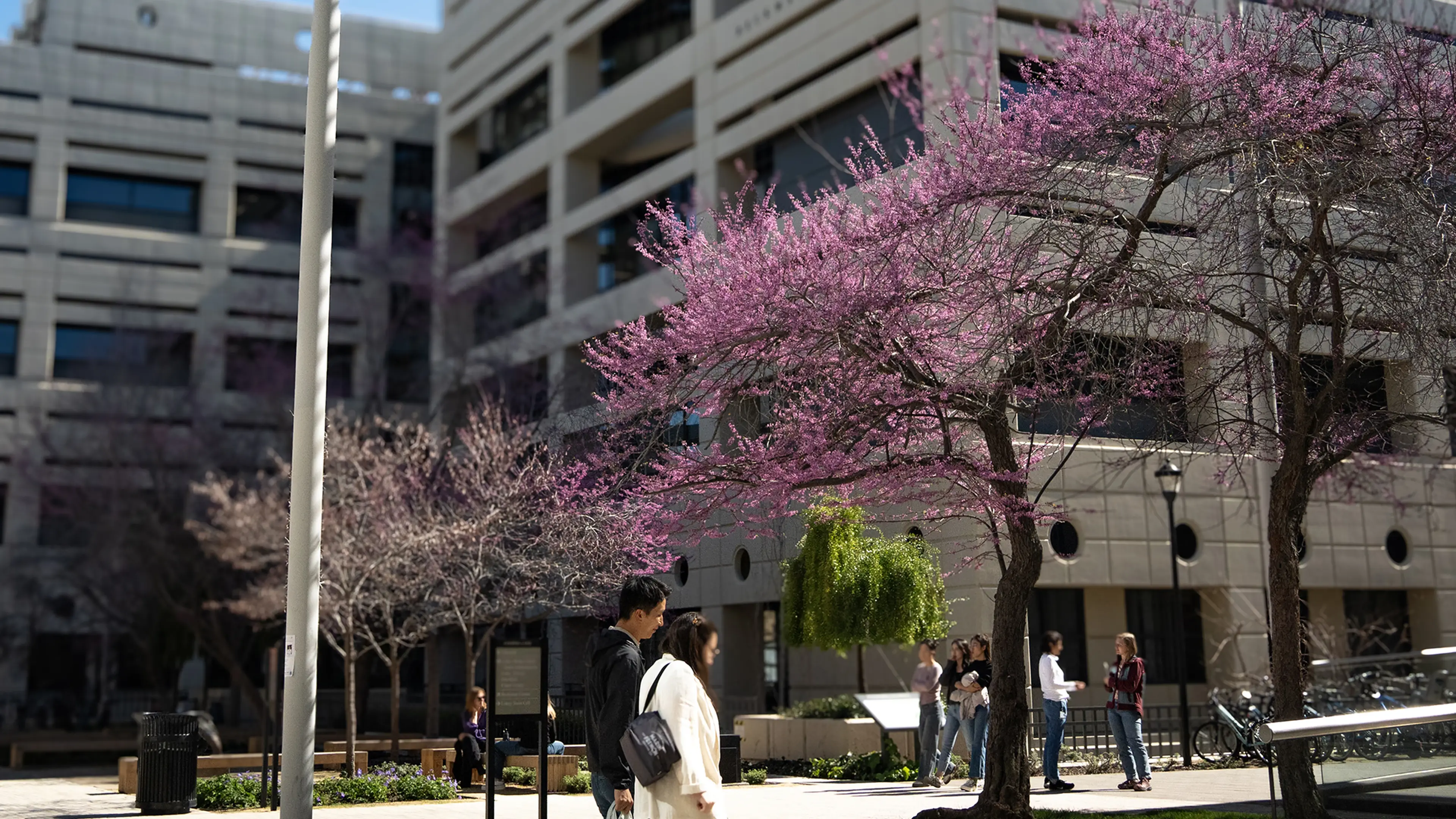
With a long-standing culture of open sharing and collegiality, the department physically integrates laboratory groups across different disciplines to foster the cross-pollination of ideas, techniques, and perspectives. Biochemistry labs and offices are located across three premier hubs on campus: the Beckman Center for Molecular and Genetic Medicine, the Shriram Center for Bioengineering and Chemical Engineering, and the Stanford Genome Technology Center.
Stanford Biochemistry is deeply committed to individualized mentorship, classroom instruction, and training the next generation of global scientific leaders. The department offers a rich array of educational pathways designed for graduate scholars, medical students, and undergraduates:
Graduate and Postdoctoral Training: As a primary home program within the Stanford Biosciences, the department supports and mentors over 60 doctoral students and postdoctoral fellows. The program focuses on personalizing the training experience to promote the unique career development of every student, postdoc, and researcher.
Advanced Specialized Coursework: The department’s curriculum covers recent breakthroughs in biochemistry, cell biology, and molecular biology. Advanced courses cover critical biological mechanisms, including:
Biophysical and Chemical Principles: Physical and chemical biochemistry, enzyme reaction mechanisms, and the structure and function of prokaryotic and eukaryotic chromosomes.
Cellular Dynamics and Molecular Machines: Membrane trafficking, molecular motors, the cytoskeleton, and the molecular basis of morphogenesis.
Genetics and Virology: Mechanisms of nucleic acid replication and recombination, yeast molecular and cell biology, and the biochemistry of bacterial and animal viruses.
Undergraduate and Medical Curriculum: Providing foundational lectures, specialized elective courses, and opportunities for directed reading and independent laboratory research.
Biochemistry researchers use a wide range of model organisms—from bacteria and yeast to multicellular animal systems—to uncover foundational biological principles and address human disease. To support these discoveries, the department provides access to exceptional, state-of-the-art research facilities and technologies, including:
Advanced Imaging: High-resolution light and electron microscopy facilities.
Single-Molecule Biophysics: Laser light traps and optical tweezers for single-molecule analysis.
Molecular Analysis and Synthesis: High-performance systems for chromatography, electrophoresis, protein and nucleic acid purification, rapid kinetic analysis, and microarray generation.
Computational and Structural Biology: Specialized computer graphic workstations for the modeling, simulation, and structural analysis of proteins and nucleic acids.