
Bulletin

Interested in attending Stanford?
Visit Undergraduate Admissions opens in a new tab or Graduate Admissions opens in a new tab.

Resources

  • About Stanford
  • About Bulletin
  • Academic Calendar opens in a new tab
  • Bulletin Archive
  • Enrollment Overview opens in a new tab
  • Enrollment Deadlines opens in a new tab
  • Degrees at a Glance

Schools

  • Doerr School of Sustainability opens in a new tab
  • Graduate School of Business opens in a new tab
  • Graduate School of Education opens in a new tab
  • School of Engineering opens in a new tab
  • School of Humanities and Science opens in a new tab
  • School of Law opens in a new tab
  • School of Medicine opens in a new tab
Give Feedback

Stanford University is accredited by the Accrediting Commission of Senior Colleges and Universities of the Western Association of Schools and Colleges opens in a new tab.

Give Feedback
Stanford
University
  • Stanford Home
  • Maps & Directions
  • Search Stanford
  • Emergency Info
  • Terms of Use
  • Privacy
  • Copyright
  • Trademarks
  • Non-Discrimination
  • Accessibility
© Stanford University.  Stanford, California 94305.
Skip to main content
Stanford University
Bulletin
Chemical Engineering
School of Engineering
  • Major
  • Minor
Program Info
  • About the Program
  • Major: Bachelor of Science
  • Minor
  • Courses
  • Contact Us
Undergrad Info
  • Admissions
  • Advising
  • General Education
Loading program
  1. Home
  2. Programs
  3. Undergraduate
  4. Chemical Engineering

About the Program

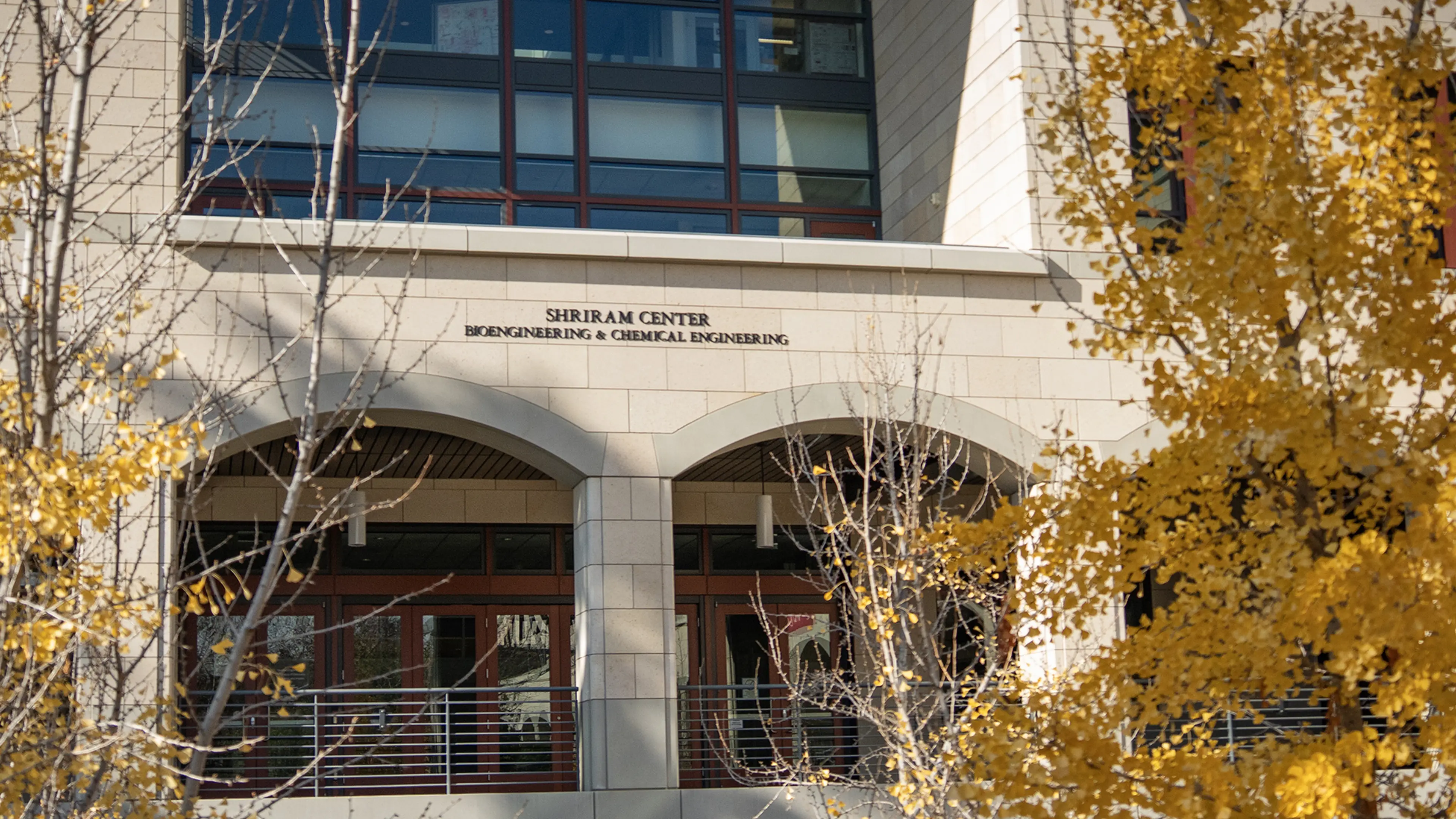
In chemical engineering, you'll explore processes to produce, transform, and transport materials. The program builds on a core foundation of chemistry, physics, and biology, teaching you to apply fundamental engineering principles to solve complex challenges. This versatile degree provides excellent preparation for high-impact careers in industries from biotechnology and energy to pharmaceuticals and environmental protection, as well as for graduate studies.

What You’ll Study

The Chemical Engineering curriculum provides a strong foundation in the sciences combined with in-depth engineering principles:

  • Master the fundamentals of chemical engineering, including thermodynamics, fluid mechanics, energy and mass transfer, chemical reaction kinetics, and process design.

  • Learn to solve complex problems by designing and conducting experiments, analyzing data, and creating solutions that account for real-world economic, environmental, and social factors.

  • Develop essential professional skills in effective communication, multidisciplinary teamwork, and ethical responsibility, preparing you for leadership roles in a constantly evolving field.

Meet Our Faculty

Our faculty are the intellectual heart of our program. As renowned researchers, passionate educators, and dedicated mentors, they drive innovation, shape the future of their fields, and inspire the next generation of leaders. Explore our directory to learn more about their teaching, research, and expertise.

Learn more

Bachelor of Science

Major
Develop your understanding of the core scientific, mathematical, and engineering principles that prepare you to conceive and design processes for producing, transforming, and transporting chemical materials. Your coursework will cover applied mathematics, material and energy balances, thermodynamics, fluid mechanics, energy and mass transfer, separations technologies, and chemical reaction kinetics and reactor design.
View Program Requirements for the Bachelor of Science program

Minor

Minor
Complement your primary undergraduate or graduate field of study with an overview of the subdisciplines of chemical engineering — including chemical, physical, mathematical, and engineering sciences.
View Program Requirements for the Minor program