
About the Program
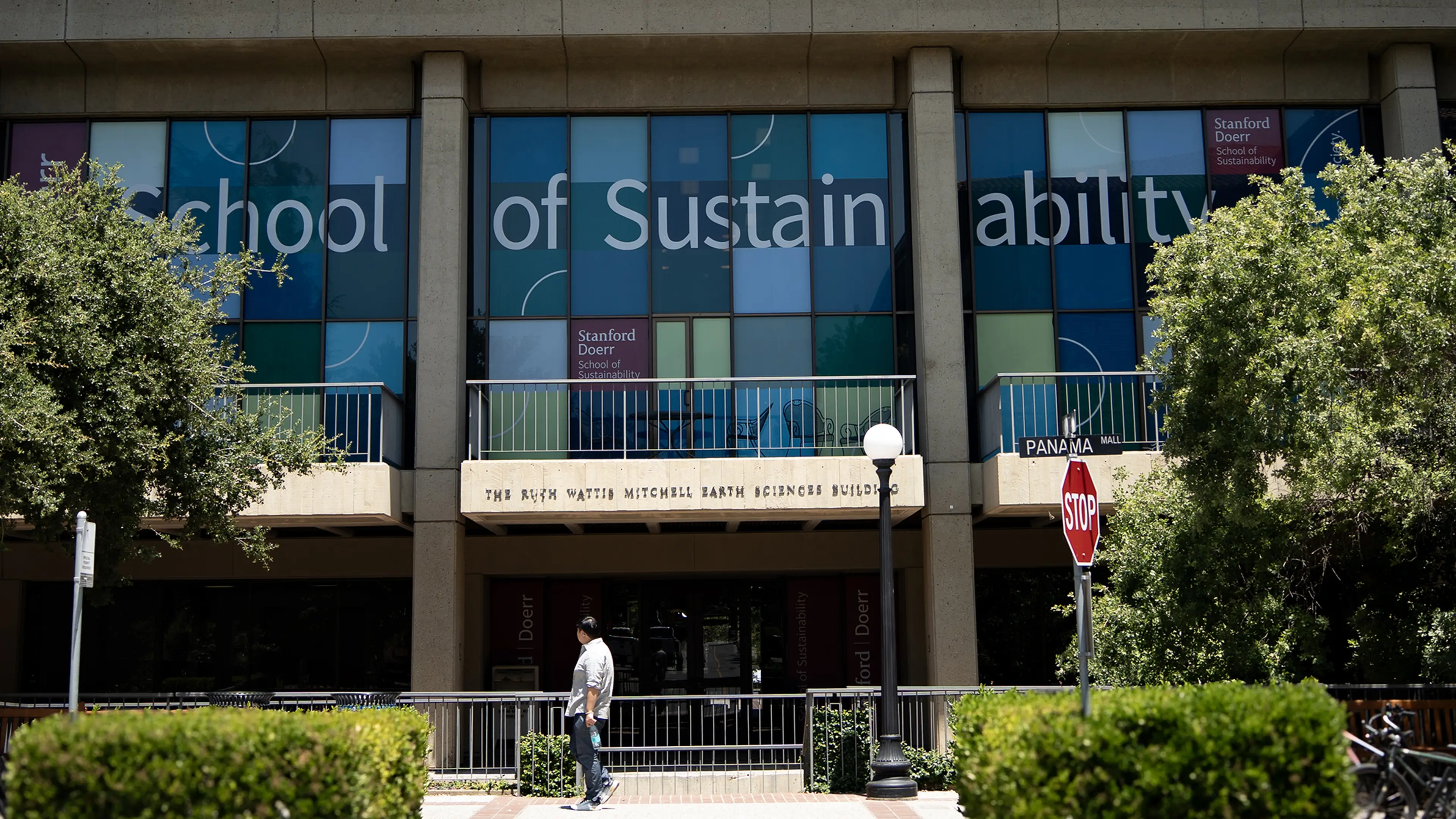
The Sustainability Science and Practice (SUST) program is an interdisciplinary coterminal master's program at the Stanford Doerr School of Sustainability. SUST prepares leaders to radically accelerate the transition to a sustainable and just society, securing human well-being worldwide and across generations.
Drawing on diverse disciplines and pedagogical methods, SUST integrates natural sciences, social sciences, and arts; theory and practice; and quantitative and qualitative methods. Students gain technical understanding of planetary functions, human-environment interactions, and strategies to lead change through case studies, expert practitioners, and real-world projects while developing the identity, agency, and skills to lead change for human and planetary well-being.
What You’ll Study
What you will study at the graduate level depends on your particular degree, academic interests, and professional goals. Key features of our program offerings include:
Understanding Complex Social-Environmental Systems: Students develop a “systems perspective,” deepening their awareness of the dynamic and interrelated nature of social-environmental systems. They explore frameworks and tools to understand, measure, and map complex social-environmental systems and their interactions to recognize potential feedbacks, thresholds, and unintended consequences, as well as to identify leverage points and opportunities for interventions that advance sustainability.
Decision-Making and Strategies for Change: Students examine the roles of diverse actors influencing change in social-environmental systems and explore strategies to align decision-making and behavior with sustainability. They explore the mindsets and approaches of transformative leaders and examine effective strategies for advancing sustainability across sectors. Students develop decision-making skills in complex and uncertain contexts, use metrics and evaluation approaches aligned with sustainability goals, cultivate leadership orientations, and practice effective communications and storytelling approaches.
Designing Innovations with Impact at Scale: Students develop an understanding of how to intervene in complex systems for transformative impact by exploring frameworks and tools from systems thinking, design thinking, social cognitive theory, behavioral economics, and partnership strategies. They develop practical skills to understand complexity, analyze root causes, and design high-leverage intervention pathways that realign systems with the goal of intergenerational well-being.
Sustainability Leadership Practicum: To integrate and internalize core lessons from the SUST curriculum, each student completes a 120-hour practicum project of their design, collaborating on a complex sustainability challenge with an outside partner and working through the constraints often faced by decision-makers and leaders. Students apply the curriculum’s leadership mindsets, knowledge, and skills to this practical experience and present their final analysis and reflections to faculty and peers.
Meet Our Faculty
Our faculty are the intellectual heart of our program. As renowned researchers, passionate educators, and dedicated mentors, they drive innovation, shape the future of their fields, and inspire the next generation of leaders. Explore our directory to learn more about their teaching, research, and expertise.