
Bulletin

Interested in attending Stanford?
Visit Undergraduate Admissions opens in a new tab or Graduate Admissions opens in a new tab.

Resources

  • About Stanford
  • About Bulletin
  • Academic Calendar opens in a new tab
  • Bulletin Archive
  • Enrollment Overview opens in a new tab
  • Enrollment Deadlines opens in a new tab
  • Degrees at a Glance

Schools

  • Doerr School of Sustainability opens in a new tab
  • Graduate School of Business opens in a new tab
  • Graduate School of Education opens in a new tab
  • School of Engineering opens in a new tab
  • School of Humanities and Science opens in a new tab
  • School of Law opens in a new tab
  • School of Medicine opens in a new tab
Give Feedback

Stanford University is accredited by the Accrediting Commission of Senior Colleges and Universities of the Western Association of Schools and Colleges opens in a new tab.

Give Feedback
Stanford
University
  • Stanford Home
  • Maps & Directions
  • Search Stanford
  • Emergency Info
  • Terms of Use
  • Privacy
  • Copyright
  • Trademarks
  • Non-Discrimination
  • Accessibility
© Stanford University.  Stanford, California 94305.
Skip to main content
Stanford University
Bulletin
Geophysics
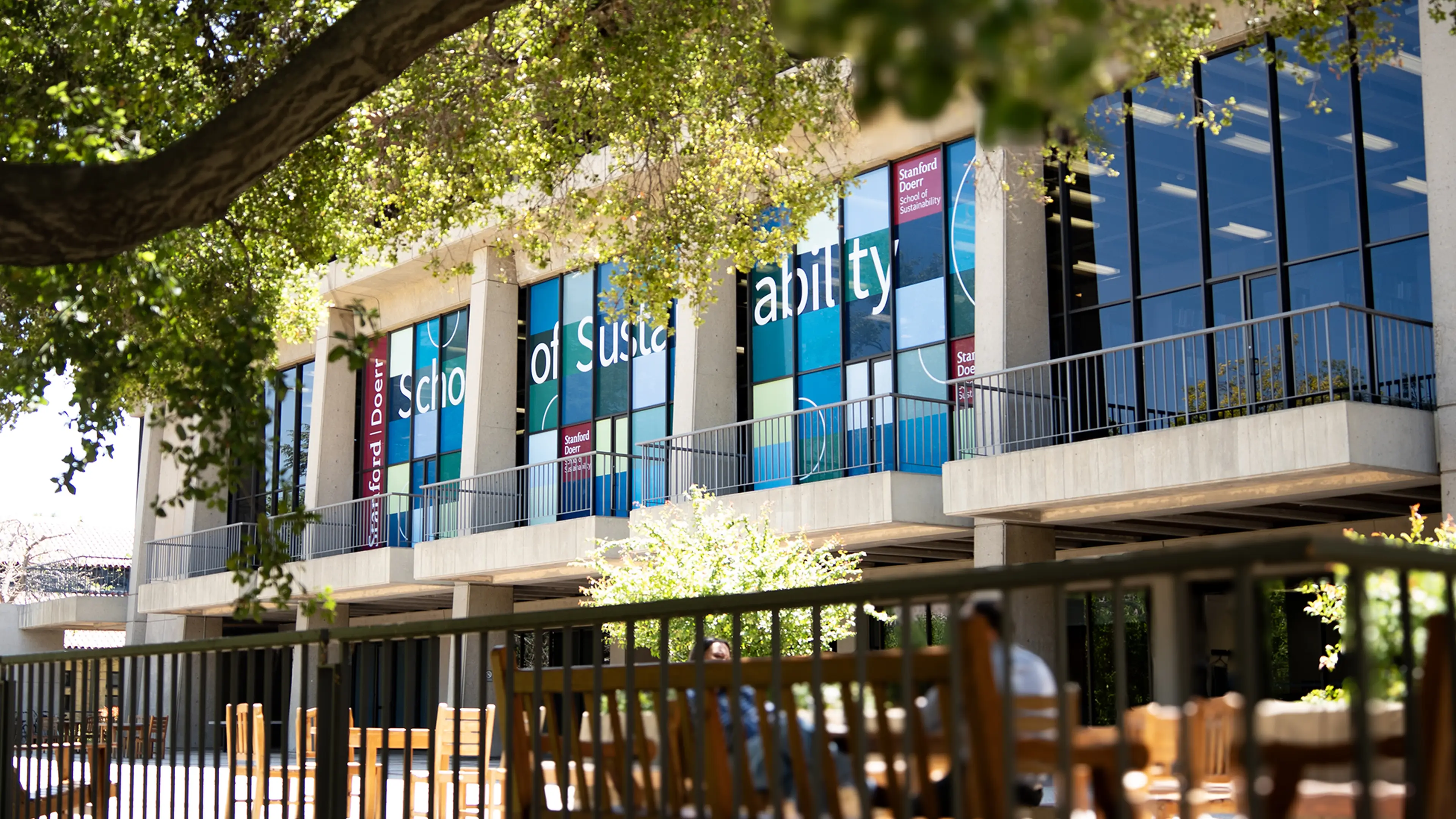
Stanford Doerr School of Sustainability
  • MS
  • PhD
  • PhD Minor
  • Coterm
Program Info
  • About the Program
  • Master of Science
  • Doctor of Philosophy
  • PhD Minor
  • Courses
  • Contact Us
Loading program
  1. Home
  2. Programs
  3. Graduate
  4. Geophysics

About the Program

Join a collaborative community dedicated to using math and physics to better understand how the Earth and other planets work. Our advanced degree options prepare you to address critical global challenges, including natural hazards, resource management, and environmental changes. Through rigorous coursework and hands-on research, you will build quantitative skills alongside expert faculty mentors. This program provides the advanced training and career preparation needed to step into leading research and professional roles within academia, industry, and government, driving impactful scientific discovery.

What You’ll Study

What you will study at the graduate level depends on your particular degree, academic interests, and professional goals. Key features of our program offerings include:

  • How we study courses that describe how geophysicists approach their work. PhD students take courses in 3 of 4 areas. MS students take 1-3 courses from the How We Study list. Areas include: computational methods involving data intensive numeral or computing models, laboratory-scale studies of physical properties, observations of earth and planets using imaging and other forms of remote sensing, and physics-based modeling of Earth processes and materials.

  • What we study courses are broader and allow students to explore what geophysicists at Stanford study, including atmosphere, climate, cryosphere, energy, oceans, tectonics and other subjects. PhD students take 2-3 unit classes towards this requirement, and MS students take 1-2 courses. Students choose classes in consultation with their advisor. 

  • Breadth requirements for PhD students can be satisfied by a Secondary Research Project or Secondary Coursework. The Secondary Research Project is a stand-alone research project that is separate from PhD research. The Secondary Coursework option includes 12 units of lecture courses.

Meet Our Faculty

Our faculty are the intellectual heart of our program. As renowned researchers, passionate educators, and dedicated mentors, they drive innovation, shape the future of their fields, and inspire the next generation of leaders. Explore our directory to learn more about their teaching, research, and expertise.

Learn more

Master of Science

MSCoterm
The coterminal Master’s program provides an exceptional opportunity for you to pursue a graduate research experience and earn an MS degree concurrently with or after your BS studies.
View Program Requirements for the Master of Science program

Doctor of Philosophy

PhD
Get the training you’ll need for a leadership role in industry, academia, and research by exposing yourself to a broad spectrum of geophysics-related specialties, including resource exploration, environmental geophysics, seismology, tectonics, and more, and by performing independent research.
View Program Requirements for the Doctor of Philosophy program

PhD Minor

PhD Minor
Complement your PhD studies in another field with graduate-level coursework that leads to a PhD minor in Geophysics.
View Program Requirements for the PhD Minor program